


Open bite: why the teeth do not meet and how it is treated
An article by P&P Ortodontia · Orthodontics · 8 min read
An open bite is a type of malocclusion in which part of the upper and lower dentition does not overlap vertically and the teeth do not contact when the jaws are closed. Most commonly, this refers to an anterior open bite, where a space remains between the upper and lower incisors.
An open bite may be mild and predominantly dentoalveolar, or it may form part of a more pronounced skeletal discrepancy. This is why what appears to be the same “gap between the front teeth” can require very different treatment in different patients.
Contents
- Why does an open bite develop?
- Open bite and tongue posture
- Juvenile idiopathic arthritis and open bite
- What problems can an open bite cause?
- How is an open bite treated?
- Treating an open bite with clear aligners
- When are orthodontic miniscrews needed?
- Why may upper-jaw expansion be necessary?
- When is orthognathic surgery required?
- Why is comprehensive diagnosis important?
- Clinical example: open bite corrected without surgery
- References and further reading
Why does an open bite develop?
Anterior open bite is a multifactorial malocclusion. Its development may be influenced by several factors acting together, including the pattern of jaw growth, tooth position, tongue function, tooth eruption and other functional or skeletal factors.
Common causes and associated factors include:
- a vertical facial growth pattern;
- excessive eruption of the posterior teeth;
- insufficient eruption or unfavourable inclination of the anterior teeth;
- prolonged childhood habits such as thumb sucking;
- tongue interposition between the teeth and atypical swallowing patterns;
- a narrow upper jaw;
- disturbances in mandibular growth;
- diseases and pathological processes affecting the temporomandibular joints.
For this reason, before treatment begins it is important to understand the mechanism responsible for the open bite, rather than simply measuring the space between the front teeth.
Open bite and tongue posture
In patients with an open bite, the tongue is often positioned between the anterior teeth either at rest or during swallowing.
However, the relationship between tongue posture and open bite is not always one-directional. Abnormal tongue function may contribute to the development and persistence of an open bite, but the tongue may also adapt to a space that already exists between the teeth.
As part of the diagnostic process, we therefore assess tongue posture, swallowing pattern and the function of the surrounding muscles. In selected cases, orthodontic treatment may be combined with myofunctional therapy.
This can also be important for long-term stability: moving the teeth alone may not be sufficient if a functional factor that supports the open bite remains unchanged.
Juvenile idiopathic arthritis and open bite
Juvenile idiopathic arthritis (JIA) deserves particular attention.
In JIA, inflammation may affect the temporomandibular joints. In a growing child, joint involvement can disturb mandibular development. This may lead to mandibular retrognathia, increased lower facial height, facial asymmetry and an open bite.
For this reason, a change in the bite of a child with JIA should not be viewed only as a problem of tooth position. International interdisciplinary recommendations emphasise the importance of assessing the temporomandibular joints, function and facial growth.
Management of patients with JIA and temporomandibular joint involvement requires cooperation between the orthodontist, rheumatologist and radiologist and, in more pronounced dentofacial deformities, a maxillofacial surgeon.
What problems can an open bite cause?
Functional problems
The front teeth are designed to bite into food and contribute to normal occlusal function. In an open bite, this function may be compromised.
In more pronounced cases, patients may find it difficult to bite through food with their front teeth. The distribution of occlusal contacts also changes, with contact and loading concentrated mainly in the posterior regions.
Speech
The position of the incisors and tongue is important for articulation. Some patients with an open bite may have speech differences, particularly when producing sounds that require precise positioning of the tongue in relation to the front teeth.
The extent of any speech disturbance varies considerably and depends not only on the severity of the open bite but also on tongue function.
Smile and facial aesthetics
With an anterior open bite, the space between the teeth may be visible during smiling and speaking.
In skeletal forms, the changes may involve not only the teeth but also facial proportions. The lower facial third may be increased, passive lip closure may be difficult and the facial profile may be affected.
Quality of life
A 2025 systematic review found that anterior open bite can affect oral health-related quality of life. The areas most commonly affected included eating, speech, smiling, aesthetic self-perception and psychosocial well-being.
The extent of the impact is highly individual. One patient may experience very few concerns, while for another an open bite may be a significant functional or aesthetic problem.
How is an open bite treated?
Treatment depends primarily on the underlying cause.
The main orthodontic objective is to determine which teeth need to be moved and in which direction in order to achieve a normal vertical relationship between the dental arches and a stable result.
Intrusion of the posterior teeth
For many patients, an important part of treatment is posterior tooth intrusion — controlled movement of the molars and premolars in an apical direction.
Even a relatively small amount of posterior intrusion can encourage counter-clockwise rotation of the mandible and contribute to closure of an anterior open bite.
When the vertical component is more pronounced, additional skeletal anchorage is often used to achieve this movement more predictably.
Extrusion of the anterior teeth
Not every open bite needs to be corrected solely through posterior intrusion.
In some dentoalveolar cases, a small and controlled extrusion of the anterior teeth may be appropriate. Treatment often combines several types of tooth movement, including changes in incisor inclination, limited anterior extrusion and vertical control of the posterior teeth.
The choice of biomechanics depends on smile aesthetics, incisal edge position, tooth and gingival display, facial proportions and the original occlusal pattern.
Treating an open bite with clear aligners
Clear aligners are well suited to the treatment of many forms of open bite in adults.
They can be used simultaneously to:
- align the teeth;
- control incisor inclination;
- perform limited extrusion of the anterior teeth;
- plan vertical control and intrusive movements of the posterior teeth;
- correct associated crowding and other tooth-position abnormalities.
Recent systematic reviews indicate that clear aligners can be effective in correcting anterior open bite. In a meta-analysis of adult patients, the mean open-bite correction was approximately 2.8 mm.
However, the actual mechanism of bite closure varies from case to case. Studies indicate that anterior tooth extrusion and changes in incisor position may play an important role, while digitally planned posterior intrusion may not always be fully expressed clinically.
The result also depends directly on patient compliance: aligners need to be worn for the number of hours per day recommended by the orthodontist. Consistent wear is particularly important when complex vertical tooth movements are required.
When are orthodontic miniscrews needed?
In more pronounced open bites, dental anchorage alone may not be sufficient.
In these cases, orthodontic miniscrews, or temporary anchorage devices (TADs), can be used to assist posterior tooth intrusion. They provide skeletal anchorage and allow force to be applied in the required direction without unwanted movement of other teeth.
Recent systematic reviews and meta-analyses support the effectiveness of TADs for molar intrusion and correction of anterior open bite.
Miniscrews can be used in combination with clear aligners.
Why may upper-jaw expansion be necessary?
An open bite is quite often associated with a narrow upper jaw.
In such cases, simply closing the space between the front teeth is not enough. The transverse dimension of the maxilla and the relationship between the posterior teeth also need to be corrected.
In children, expansion is usually carried out during growth using orthopaedic expansion appliances.
In adults, the approach depends on the severity of the transverse deficiency and the condition of the midpalatal suture. In some cases dentoalveolar expansion is possible, whereas more pronounced skeletal constriction may require skeletal expansion techniques, including appliances supported by orthodontic miniscrews.
Further orthodontic alignment and open-bite correction are then carried out after, or in combination with, expansion.
When is orthognathic surgery required?
In pronounced skeletal open bite, the problem involves not only the position of the teeth but also the three-dimensional relationship between the upper and lower jaws.
This is particularly relevant when an open bite is combined with a marked skeletal Class II or Class III discrepancy, facial asymmetry, significant vertical imbalance or other dentofacial deformities.
We plan these cases together with a maxillofacial surgeon.
Treatment includes orthodontic preparation of the dental arches, followed by orthognathic surgery under general anaesthesia. During surgery, the jaws are repositioned according to the treatment plan in order to establish a correct relationship between them.
Orthodontic treatment then continues after surgery to refine the final occlusion.
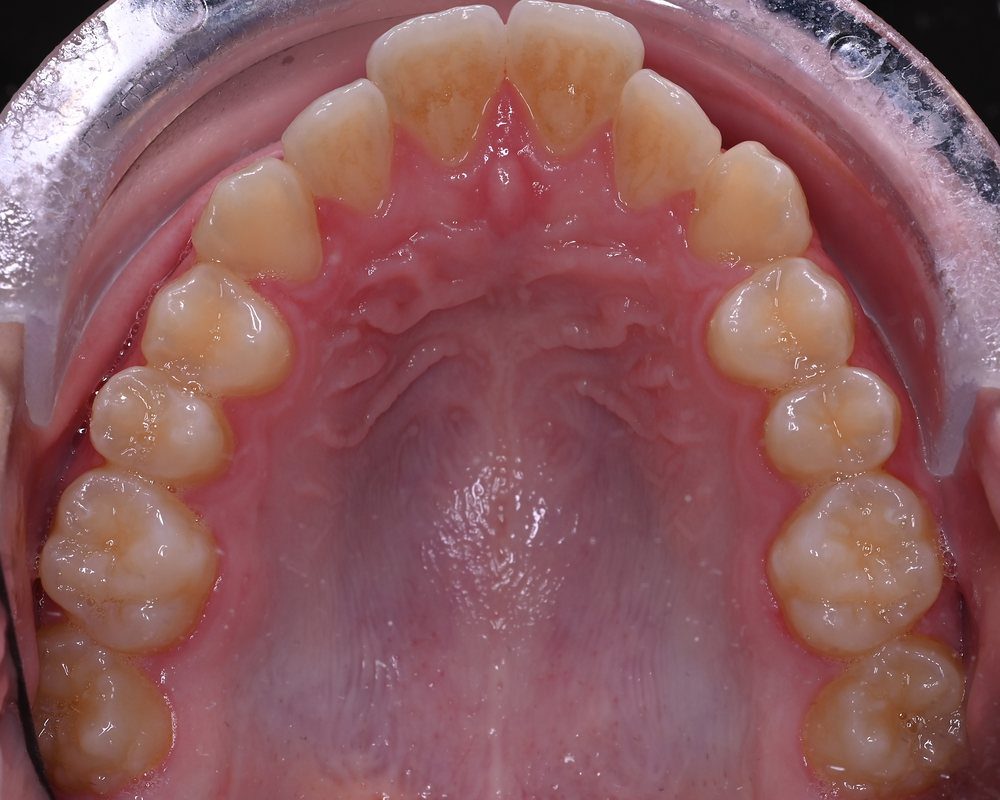
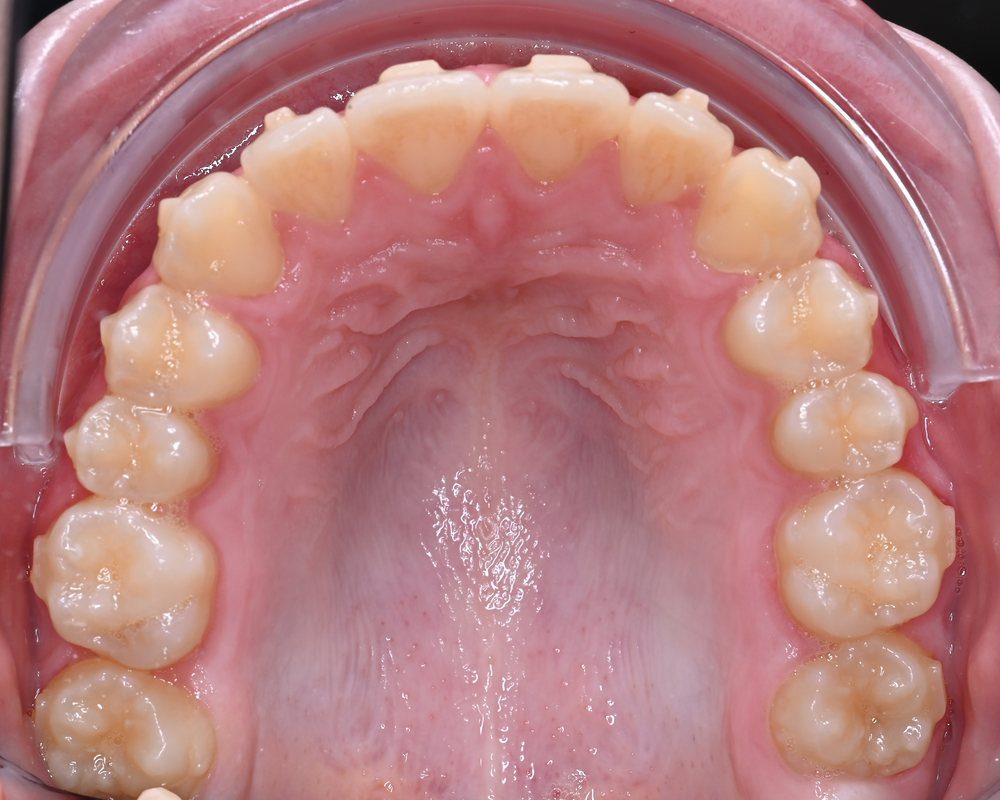
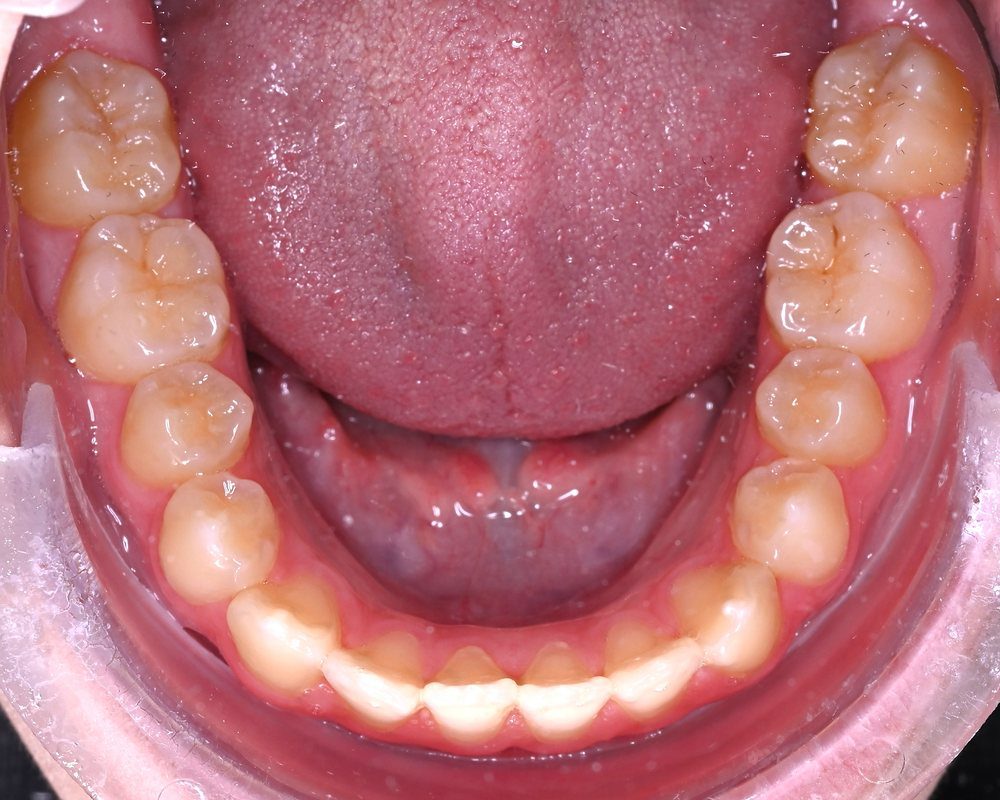
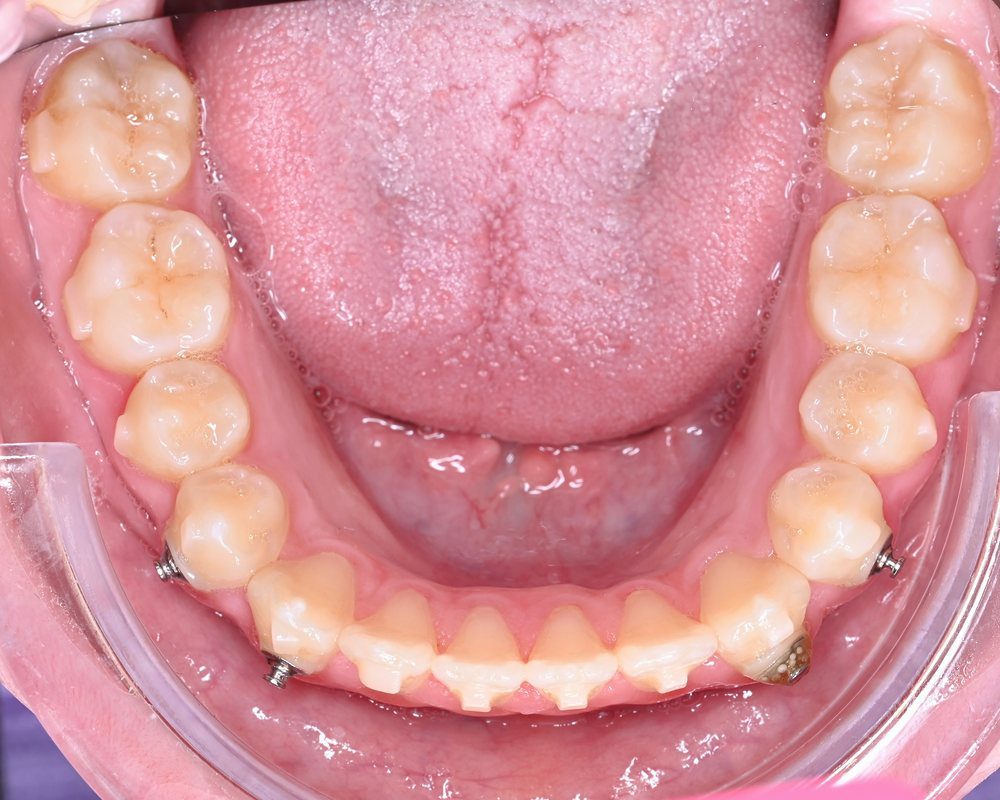
Clinical example: open bite corrected without surgery
An example of successful non-surgical correction of an open bite. The treatment protocol included expansion, sequential intrusion of the posterior teeth using specially designed bite platforms integrated into the aligners, regular and diligent use of silicone Chewies to improve aligner seating in the posterior region, and stabilising elastics.
Drag the slider: on the left before treatment, on the right the same view after 30 weeks.
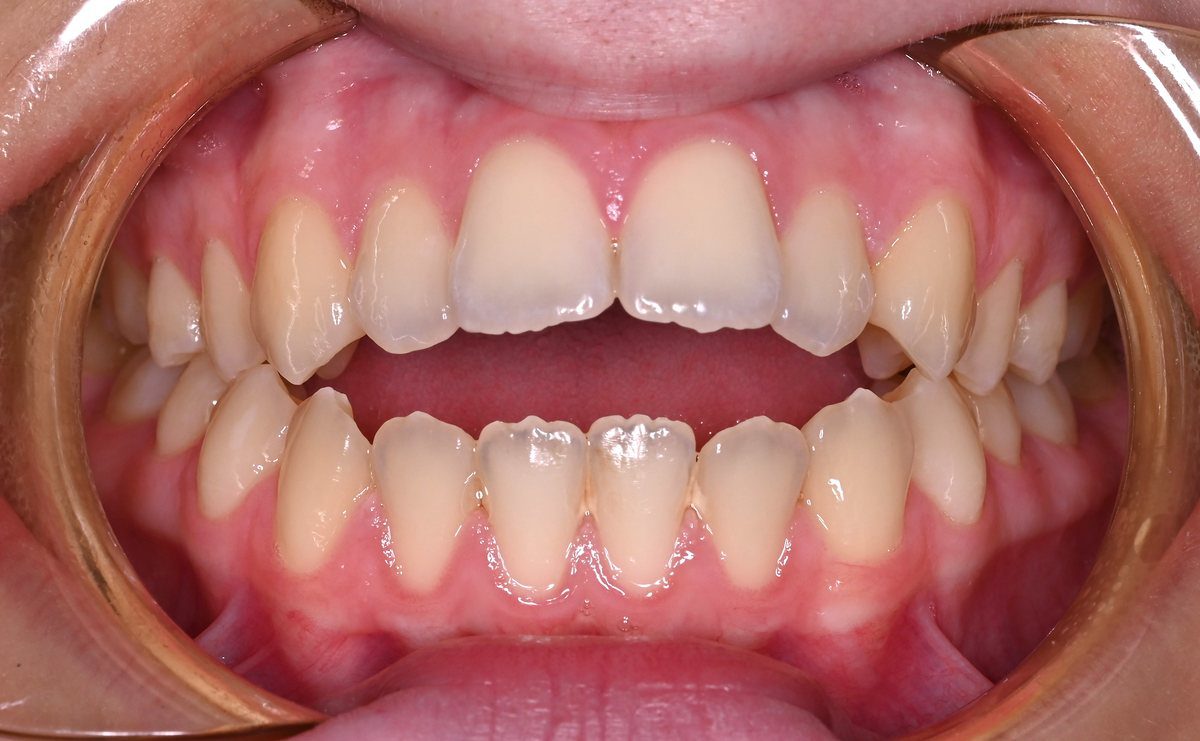
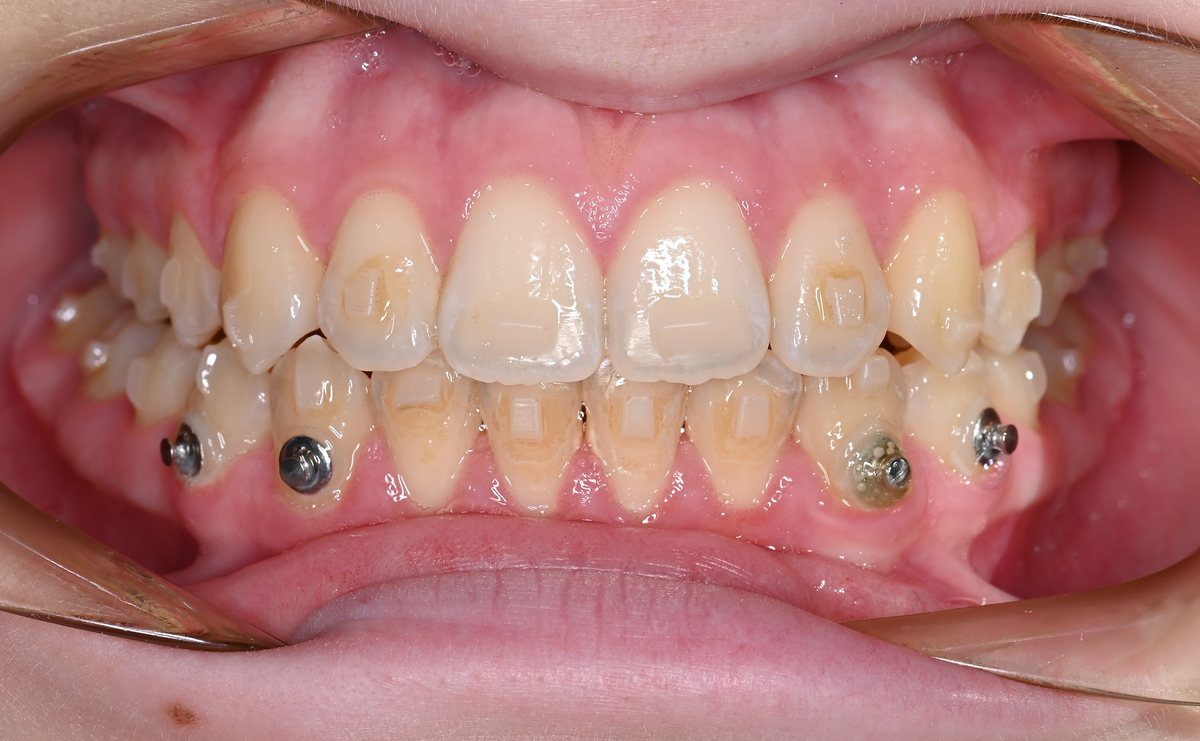
Front view
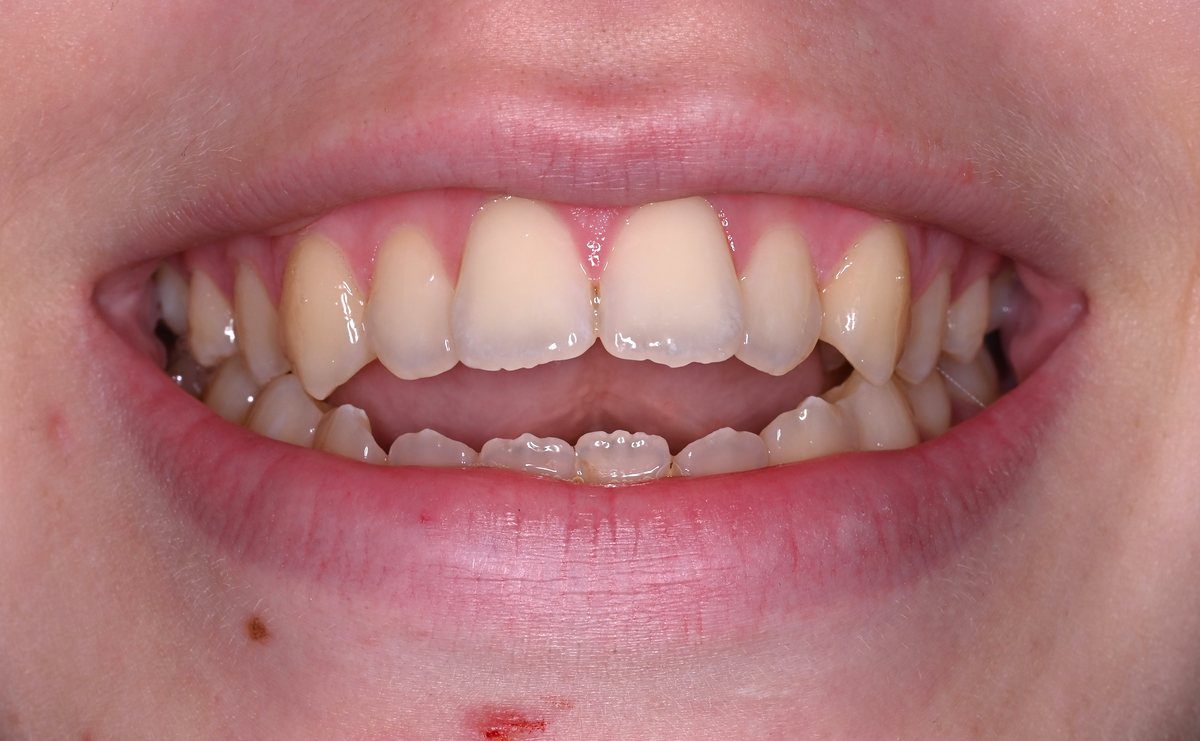
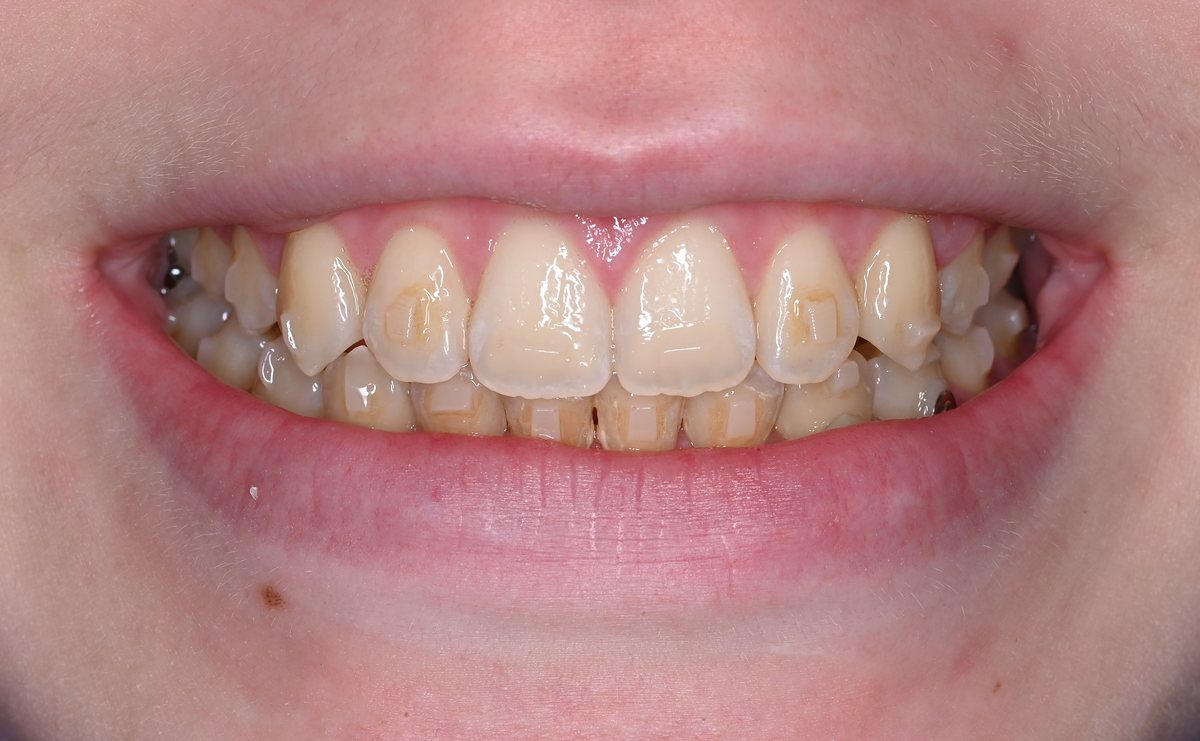
Smile
Upper arch
Lower arch
Why is comprehensive diagnosis important?
Open bite is not a single diagnosis with a single treatment protocol.
To choose the correct biomechanics, it is necessary to assess:
- the severity and extent of the open bite;
- the position of the anterior and posterior teeth;
- the width of the upper jaw;
- vertical facial proportions;
- mandibular position and growth;
- tongue posture and function;
- the condition of the temporomandibular joints;
- any associated dentofacial abnormalities.
Only after this assessment can we determine whether the optimal approach is clear-aligner treatment, maxillary expansion, skeletal anchorage with orthodontic miniscrews, or combined orthodontic-surgical treatment.
Open bite is one of the orthodontic conditions in which it is particularly important to consider not only the initial correction but also long-term stability. The aim of treatment is therefore not simply to close the space between the teeth, but to correct or control the dental, skeletal and functional factors that contribute to the open bite.
References and further reading
- Correa E. et al. Efficacy of Clear Aligner Therapy for the Treatment of Anterior Open Bite in Adults: A Systematic Review and Meta-Analysis. Orthodontics & Craniofacial Research. 2025. DOI: 10.1111/ocr.12868.
- Rodriguez-Huaringa J.E., Vargas-Mori G.X.J., Arriola-Guillén L.E. Influence of anterior open bite on oral health-related quality of life. A systematic review. Journal of Clinical and Experimental Dentistry. 2025;17(1):e87–e95. DOI: 10.4317/jced.62398.
- Correction of Anterior Open Bite Using Temporary Anchorage Devices: A Systematic Review and Meta-Analysis. Journal of Clinical Medicine. 2025;14(14):4958. DOI: 10.3390/jcm14144958.
- Stoustrup P. et al. Management of Orofacial Manifestations of Juvenile Idiopathic Arthritis: Interdisciplinary Consensus-Based Recommendations. Arthritis & Rheumatology. 2023. PMID: 36041065.
- Greenlee G.M. et al. Stability of treatment for anterior open-bite malocclusion: a meta-analysis. American Journal of Orthodontics and Dentofacial Orthopedics. 2011;139(2):154–169. DOI: 10.1016/j.ajodo.2010.10.019.
Would you like to know if this treatment is right for you?
Book a consultation with our orthodontist: we will find the cause of your bite problem and suggest a treatment plan.
Read also: Adult orthodontics · Children's orthodontics · Pricing · FAQ